Why Your AC Is Keeping You Comfortable Today… But May Not Survive Florida Summer
The warning signs homeowners miss every spring that often lead to expensive breakdowns during the hottest months of the year.
Florida homeowners often assume that if their air conditioner is cooling the house today, everything must be fine. Unfortunately, that assumption leads to thousands of unexpected breakdowns every summer.
The reality is that spring and early summer often hide problems that don't become obvious until temperatures climb into the 90s and your system is forced to run almost nonstop. A unit that seems perfectly healthy in June can suddenly fail in July when it is working harder than it has all year.
At Kool Climate HVAC Services, we see it every season. Homeowners call because their AC was working fine yesterday, but today their house feels like an oven. In many cases, the warning signs were present for weeks or even months before the breakdown occurred.
Let's look at what your air conditioner may be trying to tell you before Florida's summer heat arrives in full force.
Your AC Is About to Face Its Toughest Months
Air conditioning systems in Florida work much harder than they do in most parts of the country.
While homeowners in northern states may use their air conditioner for a few months each year, Florida systems often operate for most of the year and can run for hours at a time during summer.
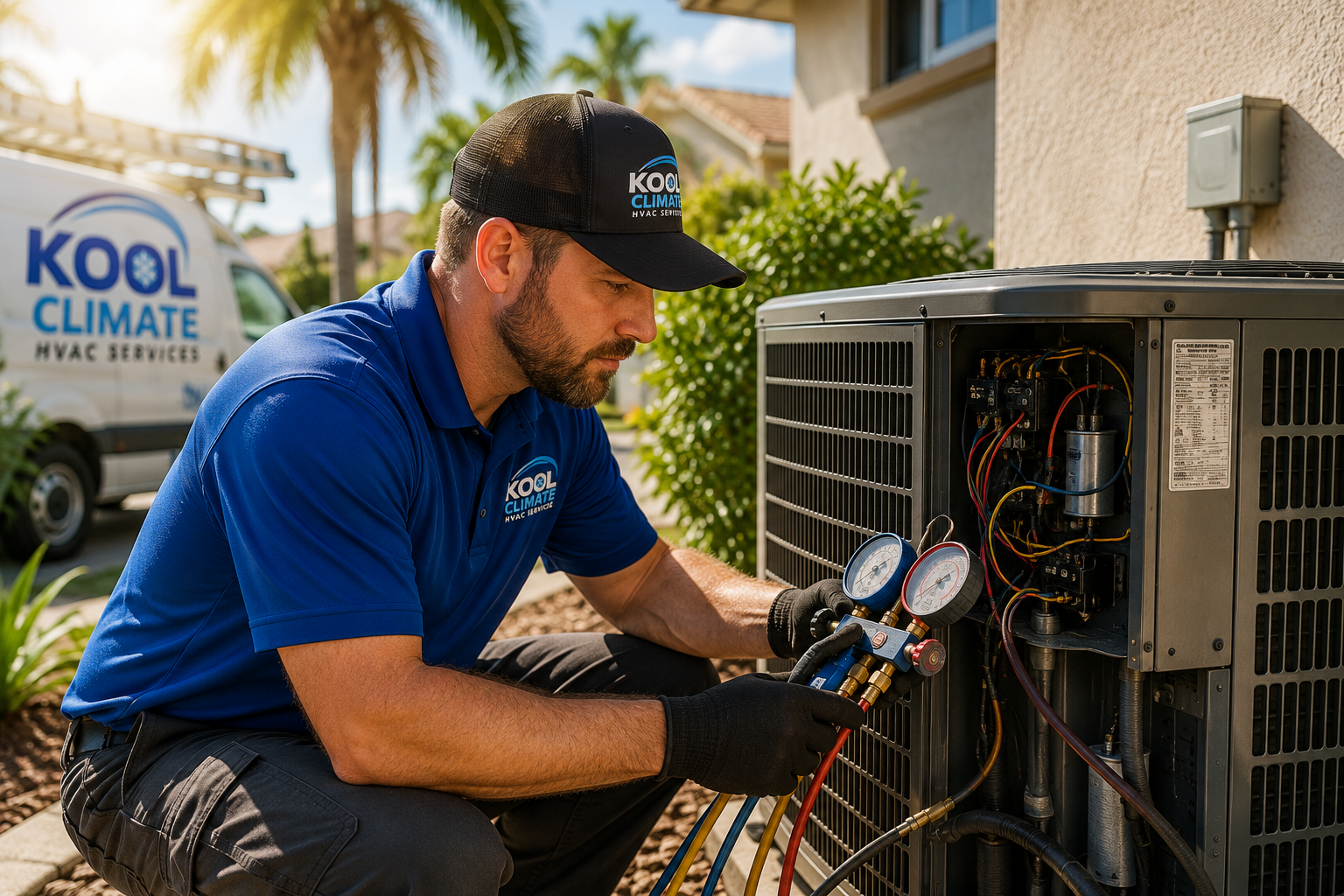
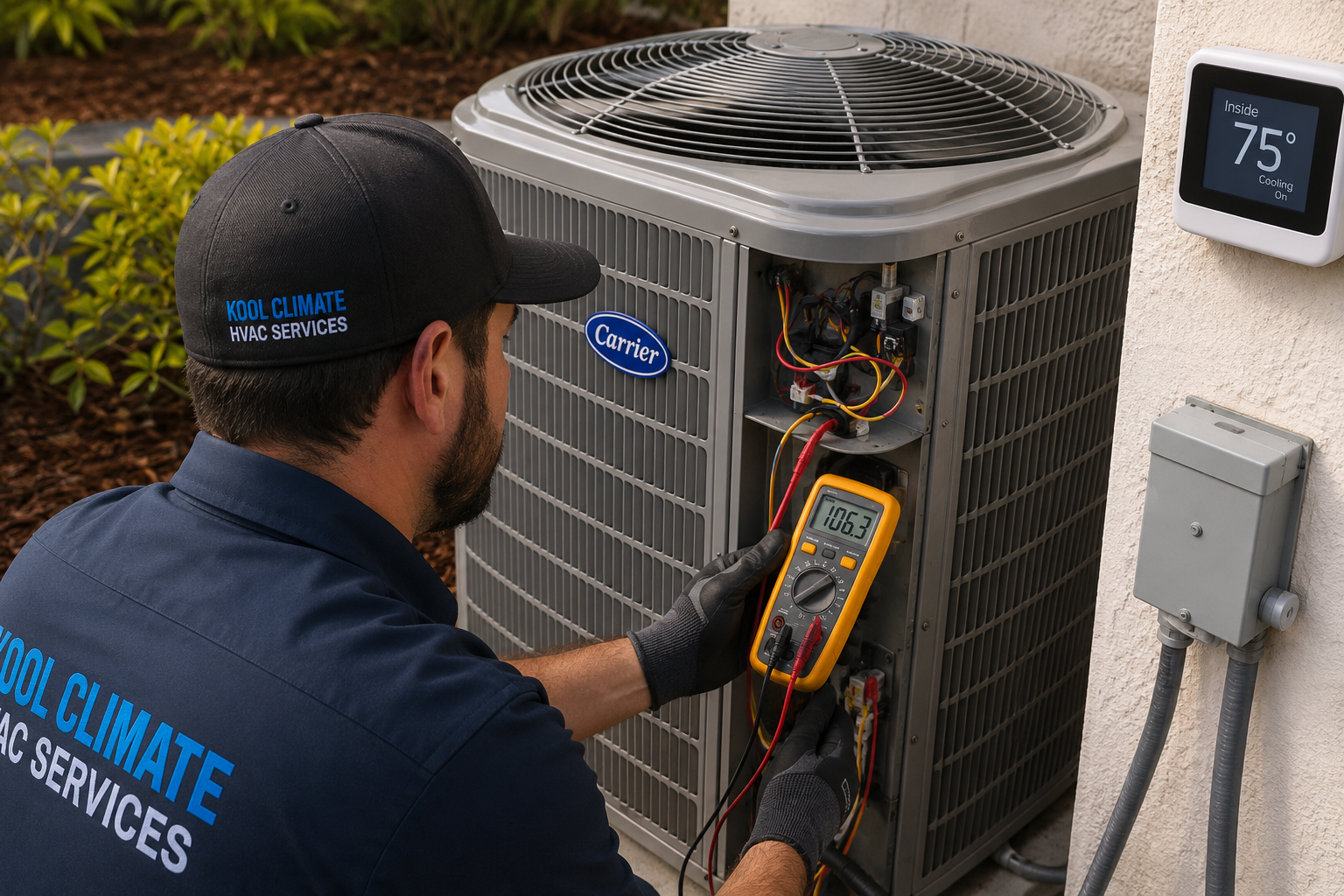
That constant demand places tremendous stress on critical components such as:
- Capacitors
- Contactors
- Blower motors
- Compressors
- Evaporator coils
- Condenser coils
- Refrigerant systems
Many parts can continue functioning while gradually deteriorating. The problem is that once temperatures soar, those weakened components can suddenly fail under the increased workload.
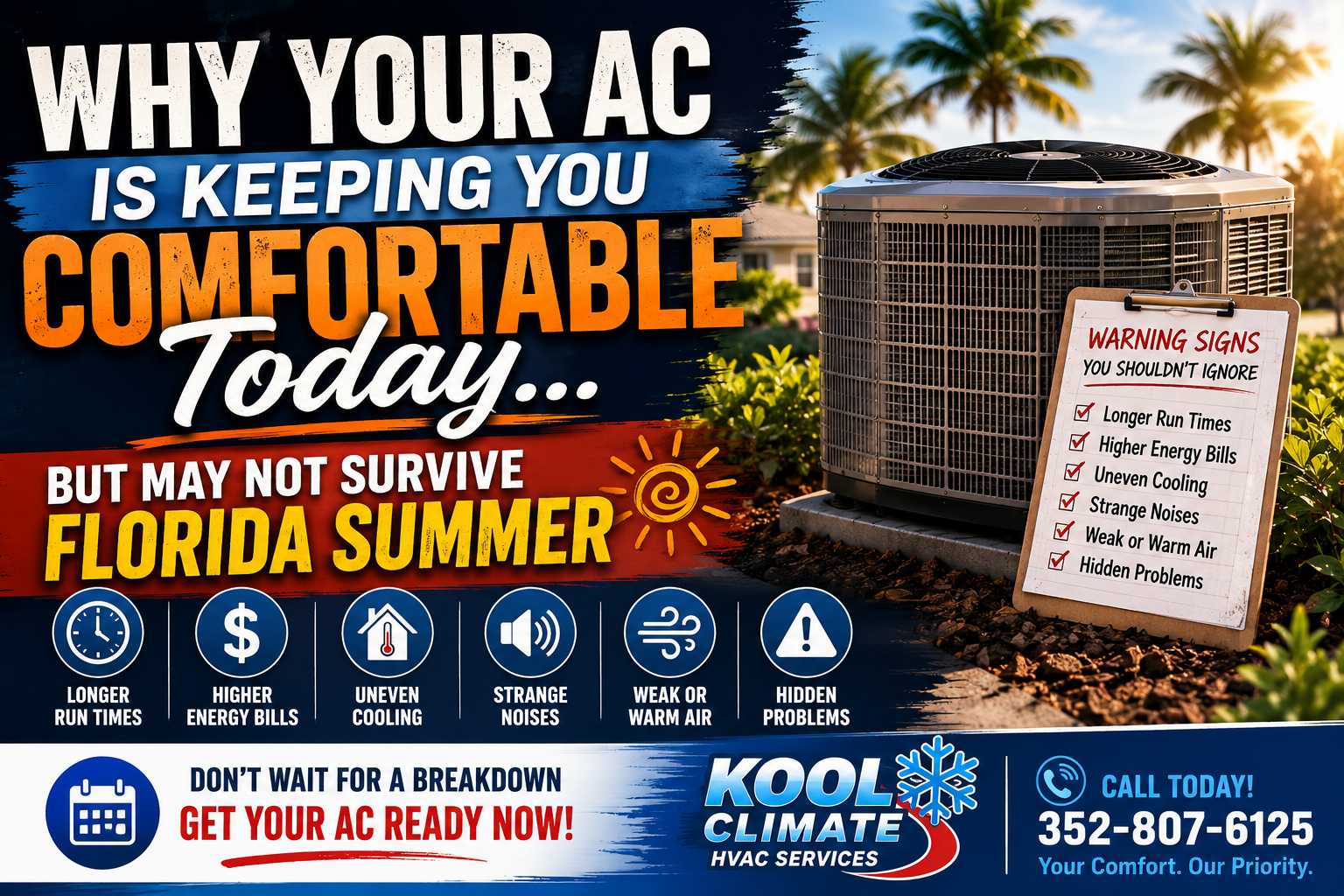
Warning Sign #1: Your AC Runs Longer Than It Used To
Many homeowners don't notice gradual changes.
If your system used to cool your home quickly but now seems to run much longer, something may be changing behind the scenes.
Possible causes include:
- Dirty evaporator coils
- Restricted airflow
- Low refrigerant levels
- Aging electrical components
- Ductwork leaks
Your system may still be keeping the house comfortable, but it is working harder to achieve the same result.
That extra strain accelerates wear and increases the likelihood of a summer breakdown.
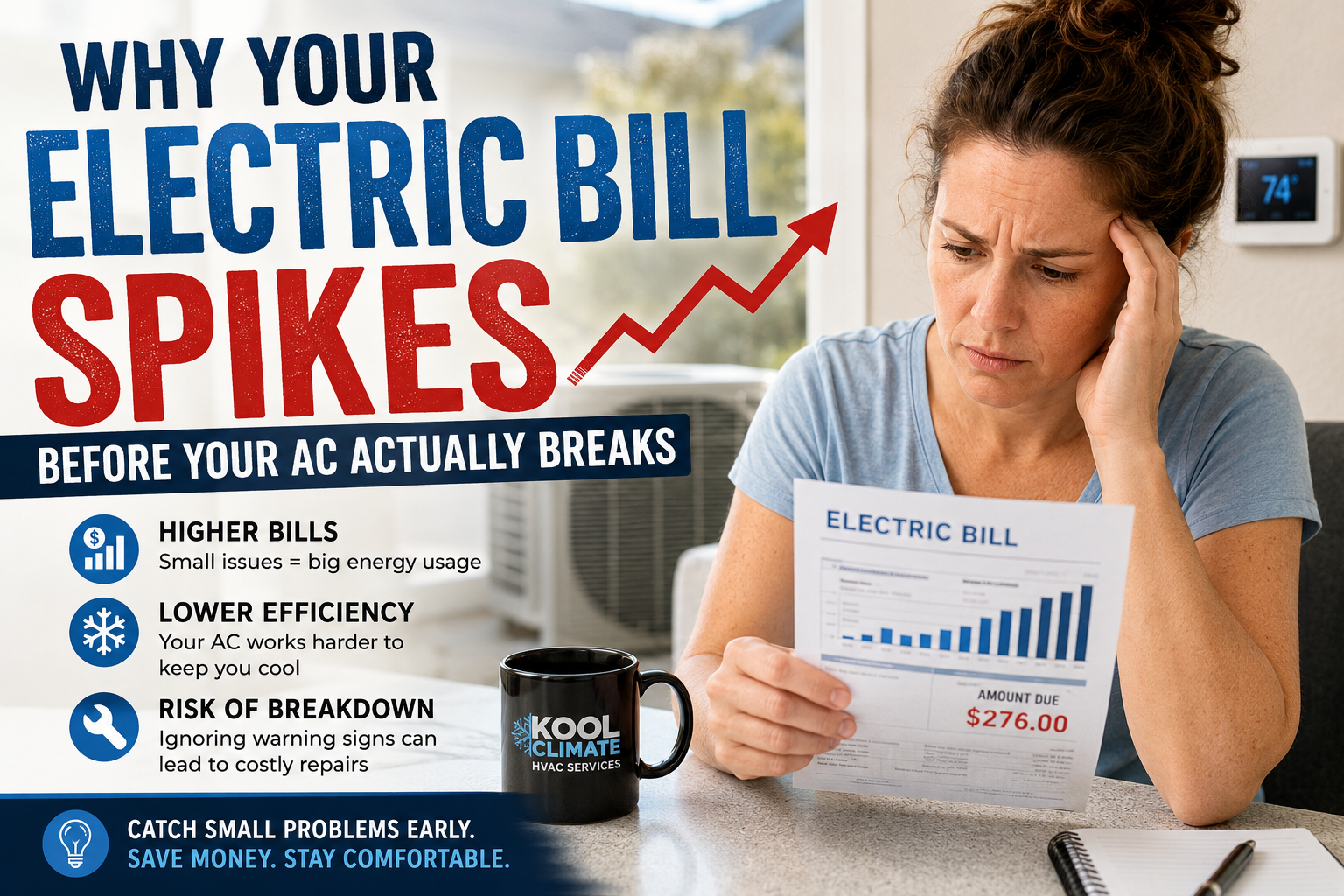
Warning Sign #2: Your Energy Bills Are Slowly Increasing
A sudden spike in energy costs usually gets attention.
A gradual increase often goes unnoticed.
As components wear and efficiency drops, your system consumes more electricity to produce the same cooling effect.
If your energy bills seem to creep higher every year despite similar usage habits, your AC could be warning you that a larger problem is developing.
Warning Sign #3: Some Rooms Are Becoming Harder to Cool
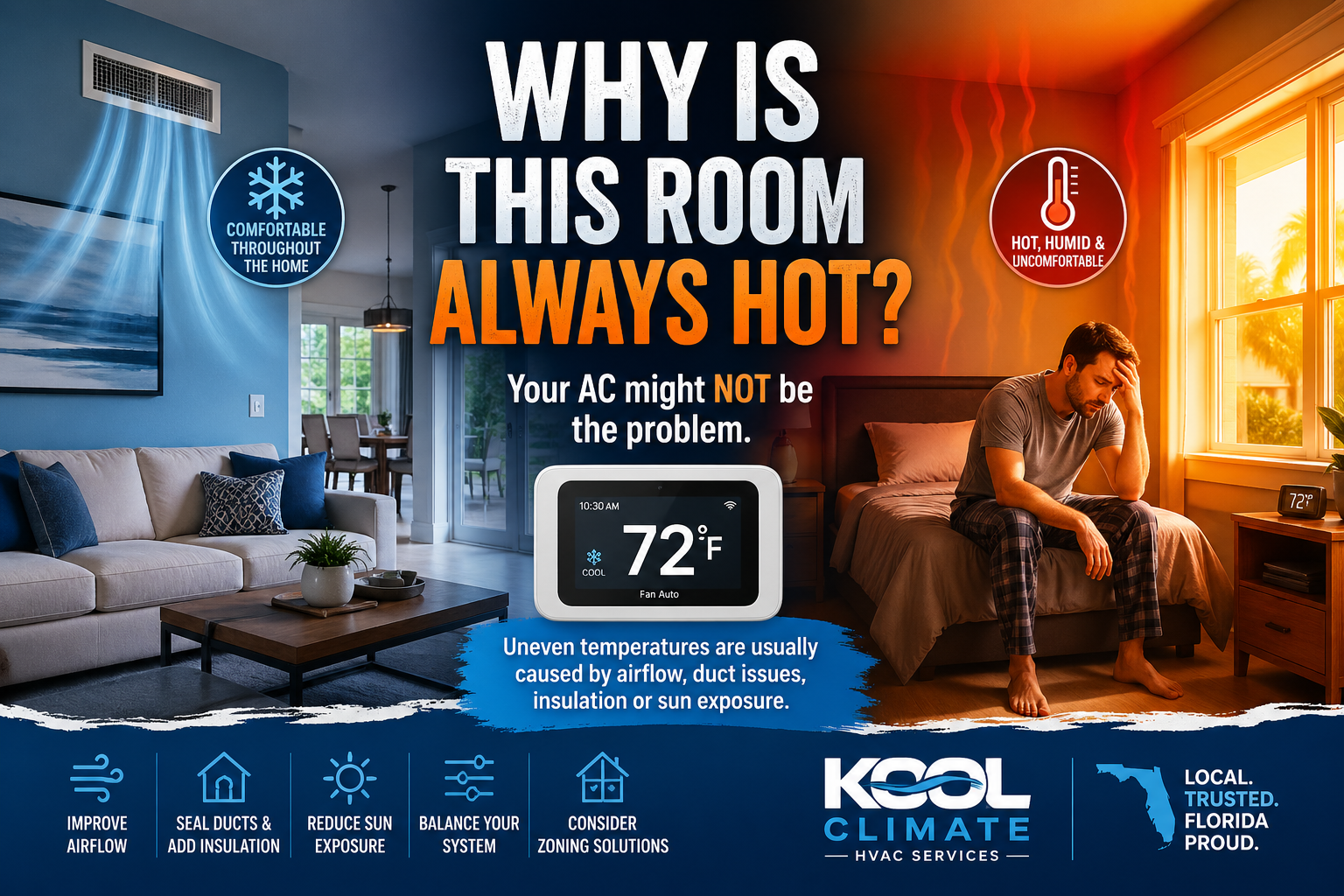
If one bedroom is warmer than the rest of the house or certain rooms never seem comfortable, don't automatically blame Florida heat.
Uneven cooling can indicate:
- Airflow problems
- Duct leaks
- Failing blower components
- Dirty coils
- System performance issues
These problems frequently worsen during peak summer demand.
Warning Sign #4: Strange Noises Are Becoming More Common
Your AC should not sound like it is struggling.
Homeowners should pay attention to:
- Buzzing
- Clicking
- Rattling
- Screeching
- Humming that seems louder than normal
While the system may continue operating, unusual sounds often indicate components that are nearing failure.
Addressing them early can often prevent larger and more expensive repairs later.
Warning Sign #5: The Air Doesn't Feel as Cold
One of the most overlooked warning signs is air that still feels cool—but not quite as cold as it used to.
Many homeowners adapt gradually and don't notice the change until outdoor temperatures become extreme.
Possible causes include:
- Dirty coils
- Refrigerant issues
- Airflow restrictions
- Aging equipment
- Electrical component problems
Once Florida's summer heat fully arrives, these issues can become impossible for the system to overcome.
Why Breakdowns Often Happen During Heat Waves
Many homeowners ask the same question:
"If there was a problem, why didn't it break earlier?"
The answer is simple.
Florida heat waves push air conditioners to their limits.
A weakened capacitor may function during moderate temperatures but fail when the system cycles continuously.
A struggling compressor may survive during spring but overheat during a week of 95-degree temperatures.
A partially clogged drain line may handle normal humidity levels but overflow when summer moisture increases.
The hottest days of the year expose weaknesses that were already present.
Prevention Is Almost Always Less Expensive Than Emergency Repairs
Most major air conditioning failures don't happen without warning.
The signs are often there long before the breakdown occurs.
Professional inspections can identify:
- Worn electrical components
- Dirty coils
- Refrigerant issues
- Airflow restrictions
- Drainage concerns
- Early signs of compressor stress
Finding these problems before peak summer temperatures arrive can help homeowners avoid uncomfortable emergencies and unexpected repair bills.
Don't Wait Until Florida Summer Finds the Weak Spot
If your air conditioner has been showing any of these warning signs, now is the time to pay attention.
The fact that your system is cooling today does not guarantee it will survive the most demanding months of the year.
Florida summers are unforgiving, and small problems have a way of becoming major breakdowns when temperatures soar.
Call Kool Climate HVAC Services Today
Whether your system needs a simple tune-up, a repair, or a professional evaluation, Kool Climate HVAC Services can help ensure your air conditioner is ready for whatever Florida summer brings.
Call 352-807-6125 today and stay comfortable before the heat arrives in full force.

Why Some Rooms in Your House Are Always Hot in Florida (And How to Fix It Without Replacing Your AC)